
Smart Data, Open Property and the Future of Home Buying
CFIT’s first cross-sector coalition developed a roadmap to speed up, digitise and transform UK home buying through Smart Data
Today’s Journey
The Impact
The Opportunity

Phase 1: Laying the Foundations for Digital Property ID
Phase 1 of CFIT’s Open Property Coalition mapped how a Digital Property ID could help to unlock £14.1bn in net social value by breaking silos and fragmentation that cause 1 in 3 home-buying transactions to fail.
- The first Smart Data coalition of its kind beyond financial services brought together key players from the ecosystem, including experts from property, technology, financial services, government and regulators.
- Together, we identified high-value Smart Data use cases, forming the foundations of a Digital Property ID that brings verified property data into one reusable, trusted layer.
- Backed by the Department for Business and Trade (DBT) and industry, the Open Property Roadmap sets out ten recommendations for industry, regulators and government to operationalise Smart Data in the home buying and selling market.
- The roadmap created a pathway, now we are shifting the coalition from strategy into implementation. In Phase 2, partners will work to co-design and co-develop minimum viable Smart Data infrastructure, while bringing the Digital Property ID concept to life through real-world testing.
The Current Problems with Home Buying and Selling
- More than 25% of buyers said their home buying experience left them less likely to move again
- 22-week average to complete a transaction
- 30% of transactions fall through
- Higher fraud risk due to fragmented data reuse and siloed digitisation
- Transaction uncertainty reduces housing mobility
- £950m annual cost to the UK economy
Root Causes
Home-buying systems have been digitised vertically, but not integrated laterally
How does this affect the current journey?
Home buying does not fail because of data, standards or technology alone, but because trusted information cannot be reliably reused by organisations across the whole home buying journey.
The Coalition’s Solution: Digital Property ID
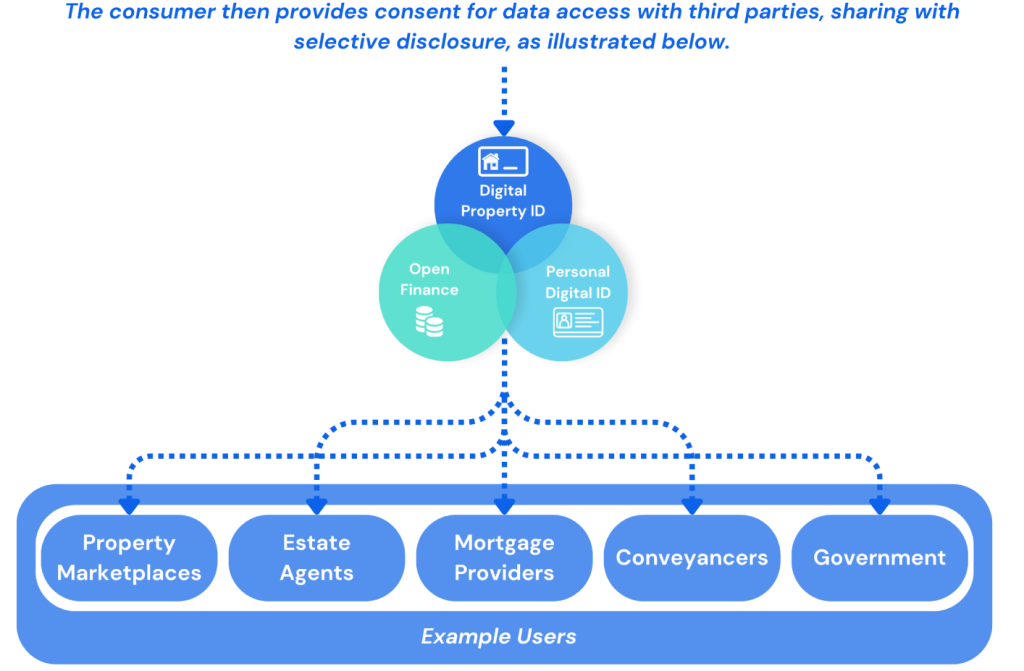
A Digital Property ID combines and facilitates the sharing of key attributes and information about a property
The coalition identified the foundations for operationalising a Digital Property ID and concluded that this could facilitate faster sharing of pre-packaged, reusable, and verified property data to everyone across the home-buying value chain.

A Digital Property ID is creating using trusted property data, then combined with other information sources (such as Open Finance and Personal Identity data) to create a verified record that can be securely shared and reused throughout the home-buying and selling journey.
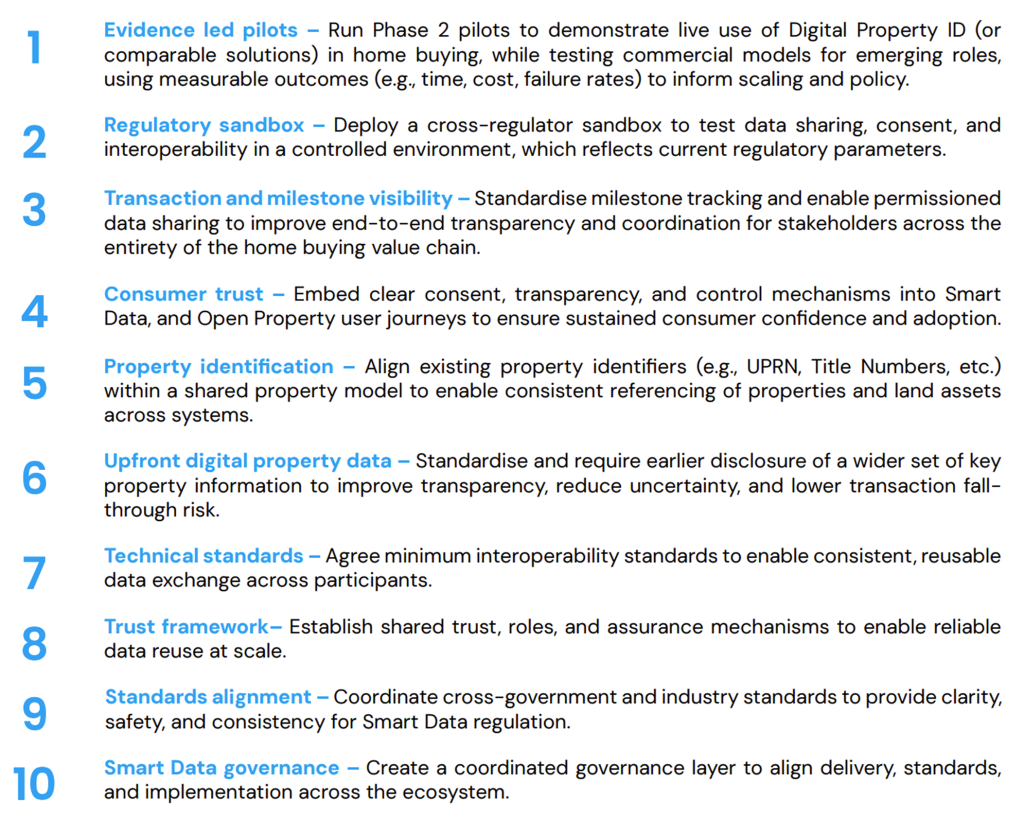
Key Recommendations from Phase 1
Developed collaboratively with Coalition partners, Phase 1 of the Coalition set out ten core recommendations for operationalising a Digital Property ID for Government, regulators, and industry.
Open Property – A Roadmap for Transforming Home Buying and Selling through Smart Data
Backed by industry and funded by the Department for Business and Trade (now DBSIT), the Open Property Coalition Roadmap sets out a clear and credible pathway to address one of the UK economy’s most persistent inefficiencies: a fragmented, paper-based homebuying system where transactions take an average of 22 weeks and around 30% fall through.
Developed through the first Smart Data coalition of its kind beyond financial services, the Roadmap demonstrates how Smart Data principles, based on secure, consent-driven and interoperable data sharing, can transform the property transaction lifecycle by reducing delays, improving transparency, and strengthening trust.
Phase 2: From Roadmap to Implementation
Phase 2 involves real data, real commercial partners, and real commercial outcomes.
Building directly on the Phase 1 roadmap and the trust frameworks already under development across the ecosystem, Phase 2 is intended to deliver pre-competitive digital infrastructure via a co-design and co-creation approach structured around three dedicated workstreams:
Provides evidence to the DPMSG working groups and industry around different future-state models for the ecosystem, including approaches centred on a common standard and those that support interoperability and reconciliation across multiple standards.
Will test this model through a live Digital Property ID pilot, built from Smart Data Clusters and tested in real transactions. The objective is not theoretical validation, but operational evidence of reuse, feasibility and measurable benefit.
Explores pathways to ecosystem adoption by defining commercial, incentives and operating models.
Working with the Digital Property Market Steering Group (DPMSG)
- CFIT’s Open Property Coalition forms part of a wider, increasingly coordinated effort across Government and industry to modernise the home buying and selling process. CFIT and the Digital Property Market Steering Group (DPMSG) share the objective of creating a more digital, trusted and interoperable property market, with distinct but complementary roles in helping to achieve it.
- The DPMSG is the sector delivery mechanism for the digital elements of the Government’s Home Buying and Selling Reform programme, bringing together Government, regulators and industry to coordinate strategic direction, standards and governance. CFIT complements this by providing an independent, evidence-led environment where organisations from across the home buying ecosystem can build, test and validate how that ambition works in practice – including how existing standards can work together, the requirements for trusted data sharing and the commercial conditions needed to support adoption at scale.
- The two programmes will work closely together throughout Phase 2. DPMSG and Government representatives will participate in the CFIT Coalition, while CFIT will contribute to relevant DPMSG working groups, ensuring that strategic direction and existing market activity inform CFIT’s testing, and the evidence and lessons generated through the Coalition can feed back into the wider work of DPMSG and Government. This approach will ensure CFIT builds on, rather than duplicates, existing initiatives and helps turn the shared ambition for a modernised home buying process into practical, scalable solutions.

Thank you to our Coalition Partners