Unlocking an estimated £5bn in SME credit with financial health tools

CFIT‑led coalition explores how data‑driven tools can halve SME loan declines

130,000
Businesses declined finance each year
£5bn p.a
Additional lending
34%
Only SMEs are confident they will be successful when applying for a loan

CFIT’s SME Coalition identifies how tech could improve the lives of 200,000 SMEs and unlock access to potentially £5bn in credit annually by helping businesses become more financially fit.

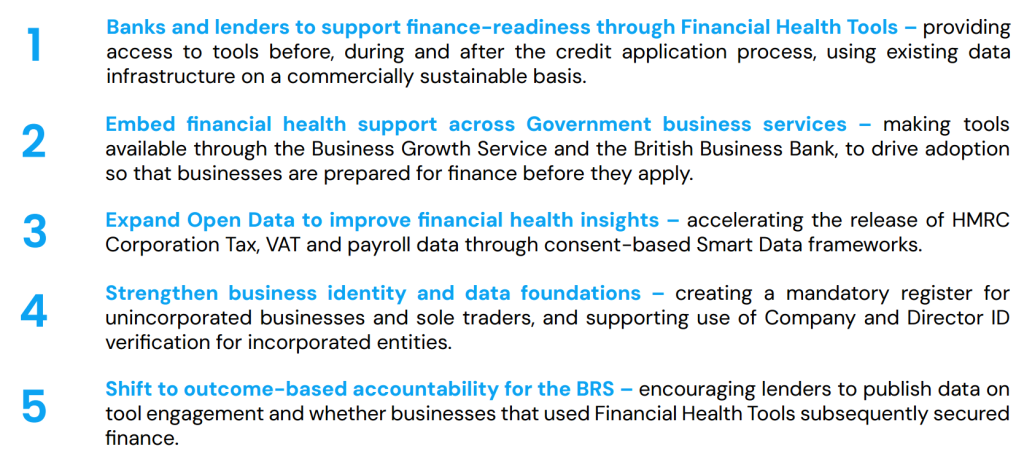
  • Findings come as the UK Government has been consulting with industry on how to improve access to finance and seeks to review the Bank Referral Scheme
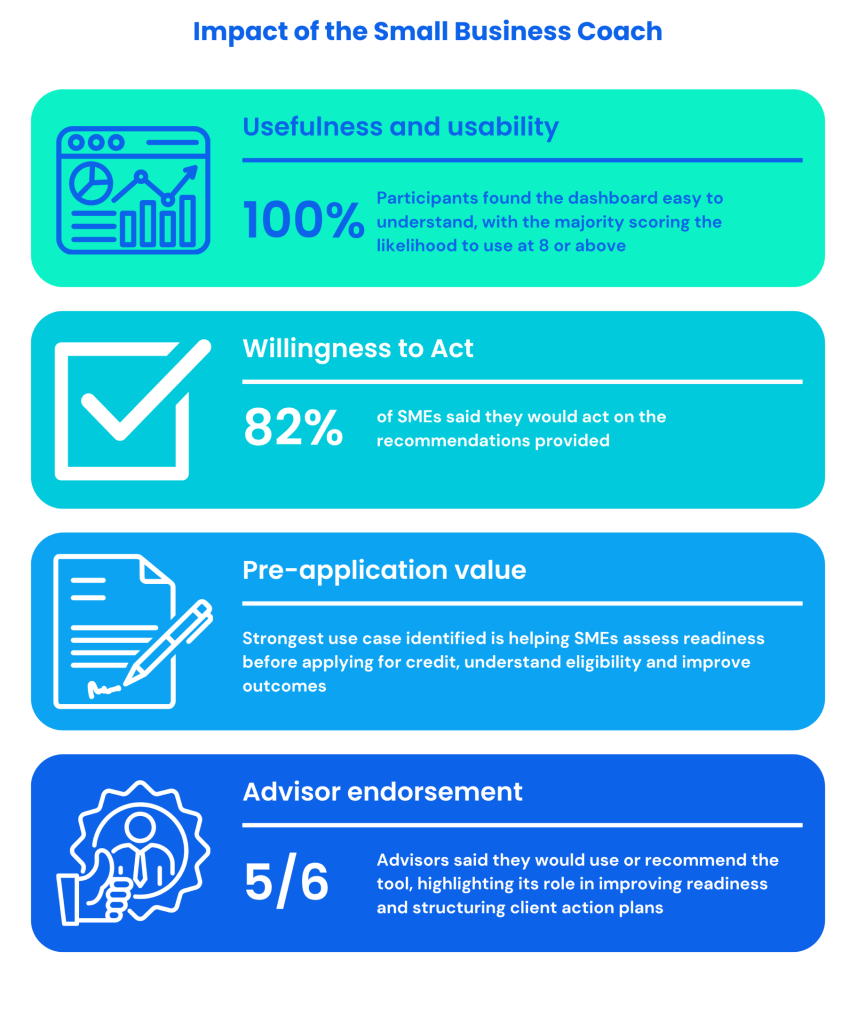
  • Two financial health tool prototypes developed by the Coalition aim to demonstrate to businesses how lenders make decisions based on their financial data. The tools provide recommendations and coaching on how to fix issues and make them lending-ready.
  • The CFIT-led coalition, supported by Mastercard, Lloyds Banking Group and HSBC UK, collaborated to prove the value of this type of tech‑driven solution to help SMEs who might be reluctant to apply for finance.

Explore how the tools work

The SME credit gap in the UK

What research reveals about missed lending opportunities

Small and medium-sized enterprises (SMEs) in the UK miss out on an estimated £5 billion in potential access to credit each year, because they are unaware of addressable issues with their corporate credit profiles, according to research by FXE Technologies (“FXE”), as part of an industry coalition led by the Centre for Finance, Innovation & Technology. As part of its coalition, CFIT is examining the role that digital financial health tools can play in improving SMEs’ access to finance. One tool being tested is FXE’s Funding Health Checker, which could transform SMEs’ visibility of how lenders assess their credit applications, after a pilot dramatically improved understanding of ‘fundability’ among four-fifths of companies.

Read the full report

The scale of the problem

How fixable data issues create £5bn in missed credit

FXE examined the credit profiles of 24,000 businesses declined for loans since 2019. Approximately 65% had “readily fixable” financial profiles, resulting in unsuccessful loan applications which could have been approved. What was holding them back?

Lack of awareness of how lenders assess Providing inaccurate and insufficient financial data Remediable financial habits

Excessive use of overdrafts, missed payments to suppliers, filing accounts late with Companies House, and accounts showing a net negative asset position were all issues that contributed.

Scaled to the whole population of UK SMEs, that equates to over 200,000 businesses and £5 billion of potentially accessible debt financing left on the table.

Introducing the Funding Health Checker

A digital dashboard for SME fundability

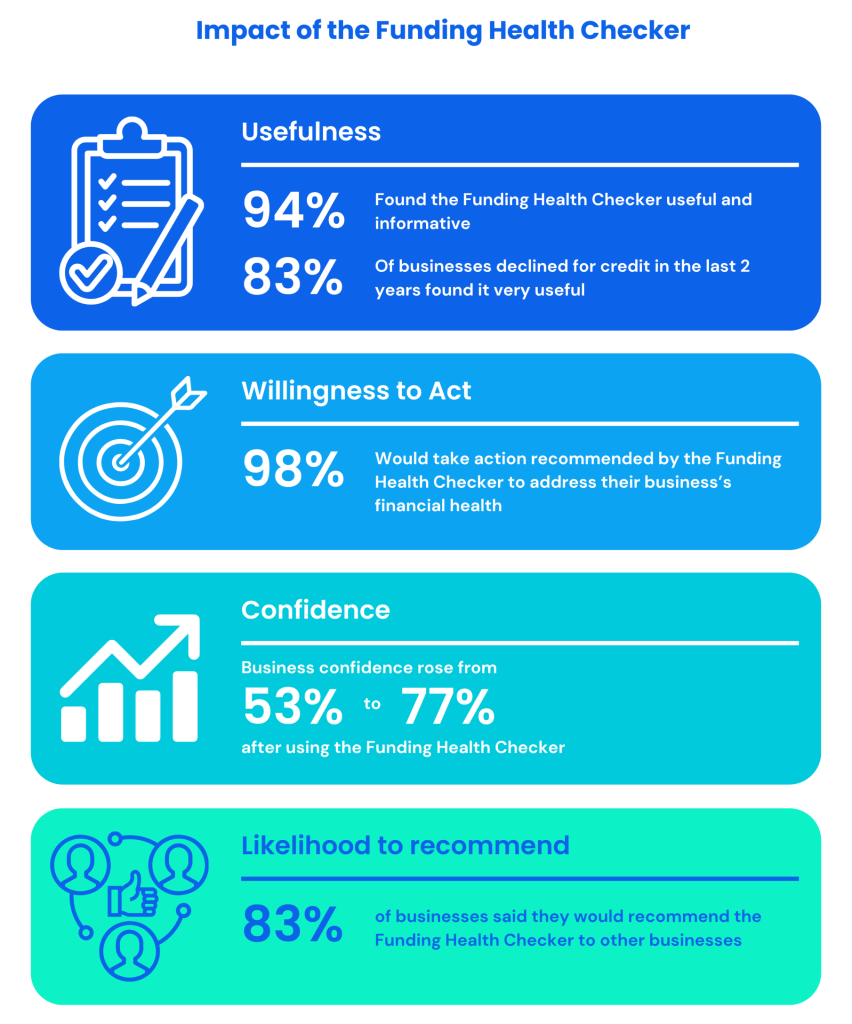
A new tool could soon change all that, giving businesses the kind of simple, objective and personalised feedback on their financial health that is already commonplace in consumer lending. Coalition Partners are working with CFIT’s to test prototypes of two financial health tools with businesses and advisors. One example is, FXE’s Funding Health Checker which is a digital dashboard that shows a business how data from Companies House, CRAs and cashflow is used by lenders to review a company’s credit application, flagging areas of concern and suggesting actions to improve creditworthiness. In a pilot, 80% of participating SMEs said the Funding Health Checker significantly improved their understanding of their fundability; 85% planned to take the suggested steps; and 90% would recommend the tool to a peer. The CFIT-led coalition, supported by Mastercard, Lloyds Banking Group and HSBC UK, launched earlier this year has collaborated to prove the value of this type of tech‑driven solution to help SMEs who might be reluctant to apply for finance.

How the tool creates impact

Empowering SMEs with data‑driven insights

By clearly showing the financial habits and data points that affect lending decisions, the Funding Health Checker helps SMEs understand their financial health, how their business is viewed by lenders and what they can do to improve their chances of getting approved for a loan. This kind of education is vital to improving confidence among business owners, many of whom are unaware of the factors that determine credit readiness. The tool provides greater clarity and transparency to the lending process, helping a business understand its financial health and likelihood to be accepted for credit.

Aligning with policy and regulation

Reinventing the Bank Referral scheme with digital tools

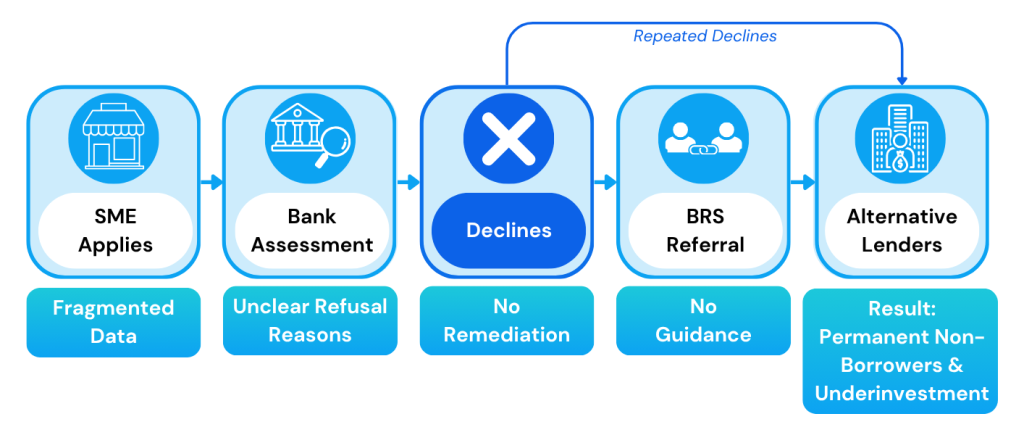
These findings come as industry awaits the outcome of the UK Government’s consultation into improvements in the Bank Referral Scheme, which aims to increase the volume of SMEs accepted for credit. HM Treasury has sought advice from industry on improving the scheme, launched in 2015 to connect businesses declined for credit with alternative lenders. 94% of firms referred to a second lender are currently rejected again. These demoralising ‘double‑declines’ contribute to a culture in which half of all UK business-owners become ‘permanent non-borrowers’. The consultation was launched after the UK Government accepted the recommendation made last year by the CFIT-led SME Finance Taskforce to review and improve the Bank Referral and Commercial Credit Data Sharing Schemes. It forms part of the Government’s wider ‘Plan for Small and Medium-Sized Businesses’, which aims to unlock access to finance for SMEs and advance the work of the SME Digital Adoption Taskforce.

Industry perspectives

Leaders across banking, policy and payments share their view

Katrin Herrling, CEO and co-founder of FXE Technologies, said:
“Our research shows that half of businesses turned down by banks could access funding if they had the right guidance. The review of the Mandatory Bank Referrals scheme is the moment to address this. Funding Health Checker gives business owners the clarity and tools they need to turn rejection into opportunity.”
Rob Haslingden, Head of Impact Assessment and Engagement at CFIT, said:
“By educating SMEs about their financial data, and providing these insights either prior to or at the point of credit application, we can help businesses take the necessary remedial action to improve their creditworthiness, emulating how similar services in consumer credit have transformed access to mortgages and personal loans. The results of our prototype testing are particularly timely, as the Government drives forward its work to improve SMEs’ use of digital tools and expand their access to finance.”
Mark Barnett, Global Head of Small and Medium Enterprises at Mastercard, said:
“Mastercard is committed to reducing the funding gap for small businesses by pursuing industry partnerships that improve transparency around credit decisions. It’s exciting to see the industry move toward consumer‑grade experiences for businesses—mirroring how credit tools have transformed access to mortgages and personal loans. By educating SMEs about the financial data lenders use, we’re empowering them with personalised insights to take action and unlock new opportunities for growth.”
Chris Loring, Managing Director, Head of Commercial Lending and Working Capital at Lloyds, said:
“We are excited to be working with the CFIT Coalition to identify innovative ways that support SMEs access to finance and amplify the critical contribution they already make to UK growth and productivity. Through this work the Coalition has demonstrated how data can be used to help businesses be prepared and ready to access lending. We are looking forward to exploring how we can take the outputs of this work to UK SMEs.”
Tom Wood, HSBC UK Head of Business Banking, said:
"HSBC UK is pleased to be working alongside industry leaders in this coalition to establish innovative solutions that provide SMEs with the insights needed to enhance their credit profiles and unlock growth opportunities. This initiative aligns with our commitment to supporting small businesses in making financing more transparent and accessible.”