

Inside a CFIT Coalition: How Digital Company ID moved from concept to reality
*For the purpose of this blog, the term ‘Digital Company ID’ is used interchangeably with ‘Corporate Digital Verification Services’.
When we talk about CFIT’s Coalitions, the outputs are usually what grab the headlines: a high-profile report, a new prototype, or a set of strategic recommendations. But those outputs are just the visible tip of the iceberg.
Behind them sits months – sometimes years – of structured work, rigorous debate, and collaboration between organisations that are often direct competitors. Coalition 2 – focused on Digital Company ID – is a powerful case study of what it takes to move from an ambitious idea to industry-ready implementation.
This is the story of the work inside a CFIT coalition.
More than a report: The building blocks of a coalition
A CFIT coalition begins by identifying the outcomes that will advance a specific theme, based on its maturity and place in the innovation lifecycle. For Digital Company ID, extensive consultation revealed that commercial considerations (via the Market Opportunity Working Group) and standards (through the Trust and Governance Working Group) were priority areas. The coalition’s intent was not to solve every sector challenge at once, but to take sequential, strategic steps toward the ideal state.
Structured sprints, measurable outcomes, and continuous stakeholder engagement ensure that every coalition moves beyond discussion to real-world progress.
In practice, this means partners are active builders, not just contributors. For Coalition 2, this principle guided extensive research undertaken by CFIT, which tested the proposition externally with lots of real prospective users of the solution.
The building blocks to get us to that solution included:
- Deep-Dive Assignments: Partners completed detailed work between sessions on data mapping and consent frameworks, whilst exploring the pros and cons of use cases, orchestration models and lots more.
- Technical Architecture: Experts shaped the UX flows (a visual representation of the journey a user takes when interacting with the product) and technical systems required for a functioning ID.
- Productive Friction: Breakthroughs happened when diverse stakeholders worked through to find common ground. Sessions are therefore designed to proactively challenge assumptions.
Who’s in the room – and why it matters
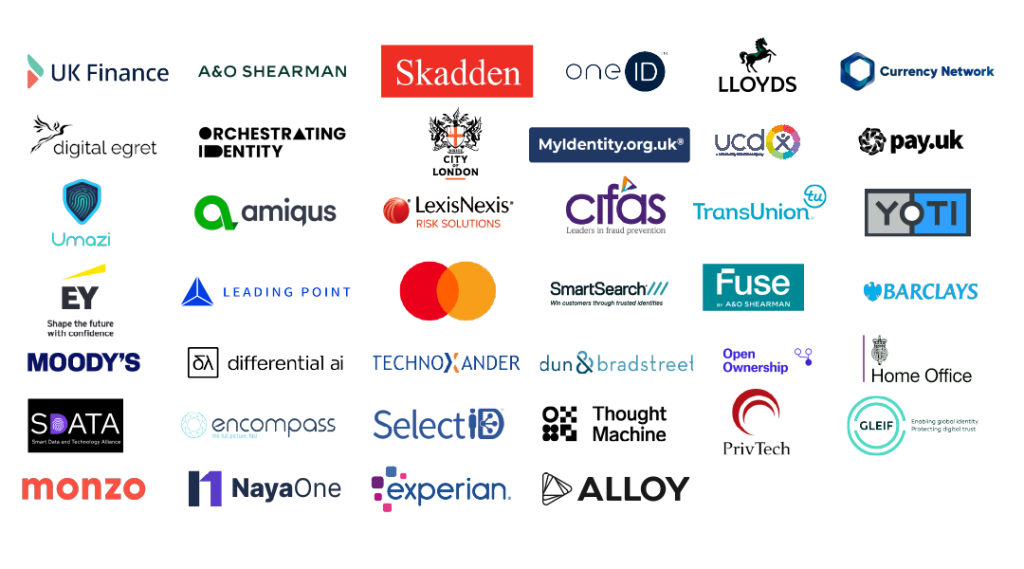
One of CFIT’s core strengths is its role as a neutral convener. In Coalition 2, we brought together a powerhouse of banks, fintechs, data providers, and policymakers.
This level of collaboration only works because CFIT provides a safe, compliant environment managed within competition law guardrails. By assembling these often disparate pieces – data, technology, and regulatory insight – we achieved what no single organisation could do in isolation.
Tackling the Technical and Commercial Complexity
From the outside, verifying a business digitally might sound straightforward. In reality, the detail is highly complex – and this is where the proposition’s real stress-testing and breakthroughs occurred. The group spent months debating critical technical and commercial questions:
- Data Integrity: Are a company’s identity and attributes “static” or “dynamic”?
- Interconnectivity: Should directors and persons with Significant Control be treated the same, or does a Digital Company ID need to connect to one director’s personal ID, with others linked through delegated authority?
- Liability: Where does the responsibility for sanctions screening sit – within the Digital Company ID layer, or with the relying party?
- Roles in the Market: Who should perform each function in the company verification ecosystem, and what semantics should define these roles clearly?
- Use Cases: Where are customers most likely to engage positively with the solution, and which use cases should be prioritised to maximise adoption and impact?
- Orchestration: How should data be shared across a complex, multi-channel ecosystem, and what obligations does each party have in the process?
These were not academic exercises. Every decision carried real-world implications for compliance, liability, and the eventual usability of the system.
By rigorously debating these issues, the coalition ensured that Digital Company ID would be both practical for industry and robust for regulators, laying the foundation for a trusted, scalable solution.
The ‘Eureka’ Moments
Progress emerged gradually through sustained evidence-building. One of the most significant breakthroughs was the concept of role separation. Rather than relying on a single, centralised provider, the coalition defined a technology-neutral framework involving distinct roles for Identity Service Providers, Attribute Providers, and Holder Providers.
We also reframed personal and company identity as interconnected systems rather than separate silos. This unlocked a new approach to delegated authority, recognising that verifying a company ultimately depends on linking it to verified individuals in a secure, privacy-preserving way. Perhaps most importantly, the group aligned on a core principle:
No single organisation can deliver a Digital Company ID alone.
It requires coordination – across data sources, identity providers, and relying parties – underpinned by user consent and clear governance.
From discussion to delivery
The CFIT model doesn’t stop at insights; it drives toward practical, implementable solutions. Once the coalition had clarified the technical and commercial components of Digital Company ID, we moved into real-world implementation with institutions across the company verification service chain – including data providers, aggregators, and orchestrators.
This stage demonstrated two critical outcomes:
- Market Interest: Large organisations showed genuine interest in deploying the solution, confirming that Digital Company ID was not only conceptually viable but also commercially attractive.
- Addressing Barriers: Legal, compliance, and internal risk challenges – often blockers for theoretically viable innovations – were actively resolved with embedded legal and regulatory expertise from A&O Shearman and Skadden, ensuring proposals could be safely implemented in practice.
Over time, this iterative process produced outcomes far beyond high-level recommendations:
- A detailed Trust & Governance Framework
- Clear proposals for government and regulators
- Defined roles and responsibilities across the ecosystem
- And critically, a pathway to implementation
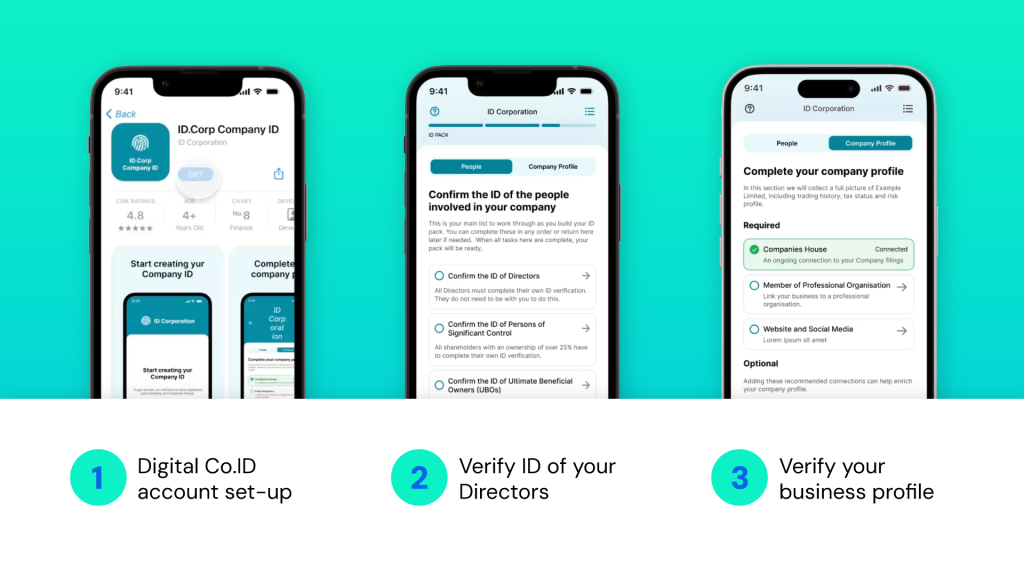
That pathway is now being realised through the development of a Minimum Viable Product (MVP), demonstrating that Digital Company ID can function as a live, interoperable service that industry can build and deploy efficiently.
 The human side of the Coalition
What often goes unseen is the level of personal commitment required. Participants contribute their expertise, prioritising collective progress over individual commercial interests.
The most valuable moments often happened in the margins: the conversations over coffee between sprints or the one-to-one exchanges that helped bridge gaps in understanding. This human element is what transforms a group of professionals into a genuine problem-solving ecosystem.
Why this model works
Coalition 2 was about solving a systemic challenge: creating a trusted, scalable way to verify companies in a digital economy. This isn’t a problem government or industry can solve alone.
By bringing together the right expertise, structuring the work effectively, and focusing relentlessly on delivery, we have created a clear pathway for the UK to lead globally in digital identity innovation. Our coalitions are spaces where every voice is heard, and all perspectives are considered – ensuring that solutions are robust, practical, and widely supported.
Digital Company ID is now moving from concept to reality, proving what is possible when the UK fintech ecosystem comes together to solve the problems it cannot solve alone.